Hi3dai
English

Trust guide

is hi3d safe for everyday 3D creation?

Hi3d can speed up concepting and asset creation, but it is not a substitute for review, testing, or professional judgment. Use it as a supervised creative tool.

4 checks
to review before delivery
Human-led
creative and technical decisions
Export-ready
starting points, not guarantees
Try Hi3d

Reality check

3 misconceptions about AI 3D safety

Safety depends less on whether a model was generated by AI and more on how the result is reviewed, used, and shared. These three assumptions cause the most avoidable problems.

Required Optional
  • Misconception: an attractive model is automatically production-ready. — Visual quality does not prove clean topology, correct scale, watertight geometry, rig compatibility, or reliable UVs. Inspect the asset before using it.

  • Misconception: AI-generated models are always original and unrestricted. — A generated result may resemble familiar designs, characters, logos, or reference material. Check ownership, permissions, and licensing before commercial publication.

  • Misconception: a free or anonymous workflow removes all privacy concerns. — Do not upload confidential product designs, unreleased characters, private photographs, or client material unless you understand the service's handling practices.

  • Misconception: AI can make the final decision about safety. — A person must decide whether an output is suitable for its intended use, especially for printing, manufacturing, education, accessibility, or public distribution.

What to expect

What it actually is

Hi3d is an AI 3D model generator: it turns prompts or visual references into a useful three-dimensional starting point. It is best understood as an accelerator for exploration, not an authority.

1

A creative assistant, not a designer of record

Hi3d can suggest shapes, proportions, styles, and object details, but it does not know your complete brief, brand rules, manufacturing constraints, or audience.

What to do instead

Use a clear brief, compare several outputs, and have a human select and refine the result.

2

A mesh generator, not a quality certificate

An output may contain hidden surfaces, thin areas, uneven density, intersecting parts, non-manifold edges, or other issues that are not obvious in a thumbnail.

What to do instead

Open the model in your preferred 3D application and run visual, topology, scale, and file-integrity checks.

3

A source of possibilities, not guaranteed originality

Image and text generation can produce familiar visual patterns or accidental similarities to existing work. A plausible result is not proof of unrestricted use.

What to do instead

Keep references documented, perform an IP review for important projects, and alter or replace questionable elements.

4

A fast workflow, not a replacement for testing

AI cannot physically test a model, validate a production pipeline, confirm a game engine setup, or guarantee that a printed object will function as intended.

What to do instead

Prototype, export, test, and revise in the environment where the model will actually be used.

Use judgment

When not to use it

An AI 3D model generator is not the right first step for every project. Choose a conventional workflow when the cost of an unverified assumption is high.

or

Option 1

The model will support a safety-critical, medical, structural, or load-bearing purpose

Use verified CAD, engineering, or specialist 3D workflows instead of relying on a generated asset.

These projects require measurable tolerances, traceable decisions, and validation that a quick AI output cannot provide.
or

Option 2

You are handling confidential, unreleased, or personally sensitive reference material

Keep the material in an approved private workflow, remove sensitive details, or create a non-sensitive placeholder.

Convenience is not a reason to expose a client's design, private image, or unpublished intellectual property.

or

Option 3

The asset must match an existing product, character, logo, or production specification exactly

Start from authorized source files or commission a controlled recreation, then use Hi3d only for low-risk exploration if appropriate.

Similarity, precision, and rights management matter more than speed in tightly constrained work.

Review before release

FAQ

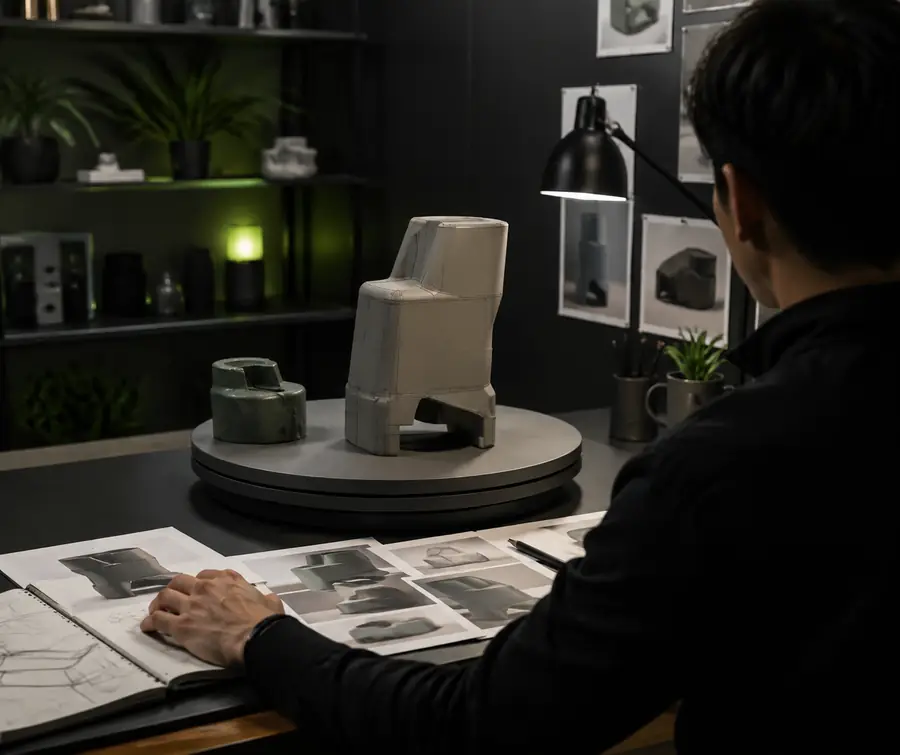
Early AI-generated 3D model awaiting inspection
Generated draft
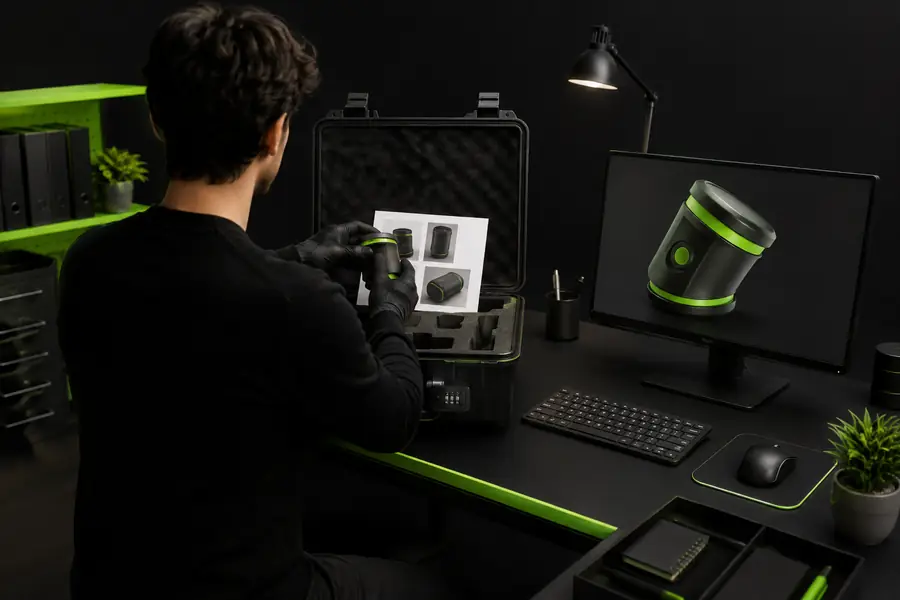
Reviewed 3D model prepared for a practical workflow
Reviewed asset

Are AI-generated 3D models any good? They can be very useful for ideation, prototypes, visual references, game concepts, and low-risk production starting points. Their value depends on the task and the amount of cleanup required. For dependable results, inspect topology, proportions, scale, materials, file format, and licensing context before delivery. A polished render can hide technical defects, so review the actual mesh rather than judging only the preview. If the model will be printed, imported into Blender, animated, manufactured, or sold, test it in that real destination and keep a human responsible for the final decision.

Generated draftReviewed asset